
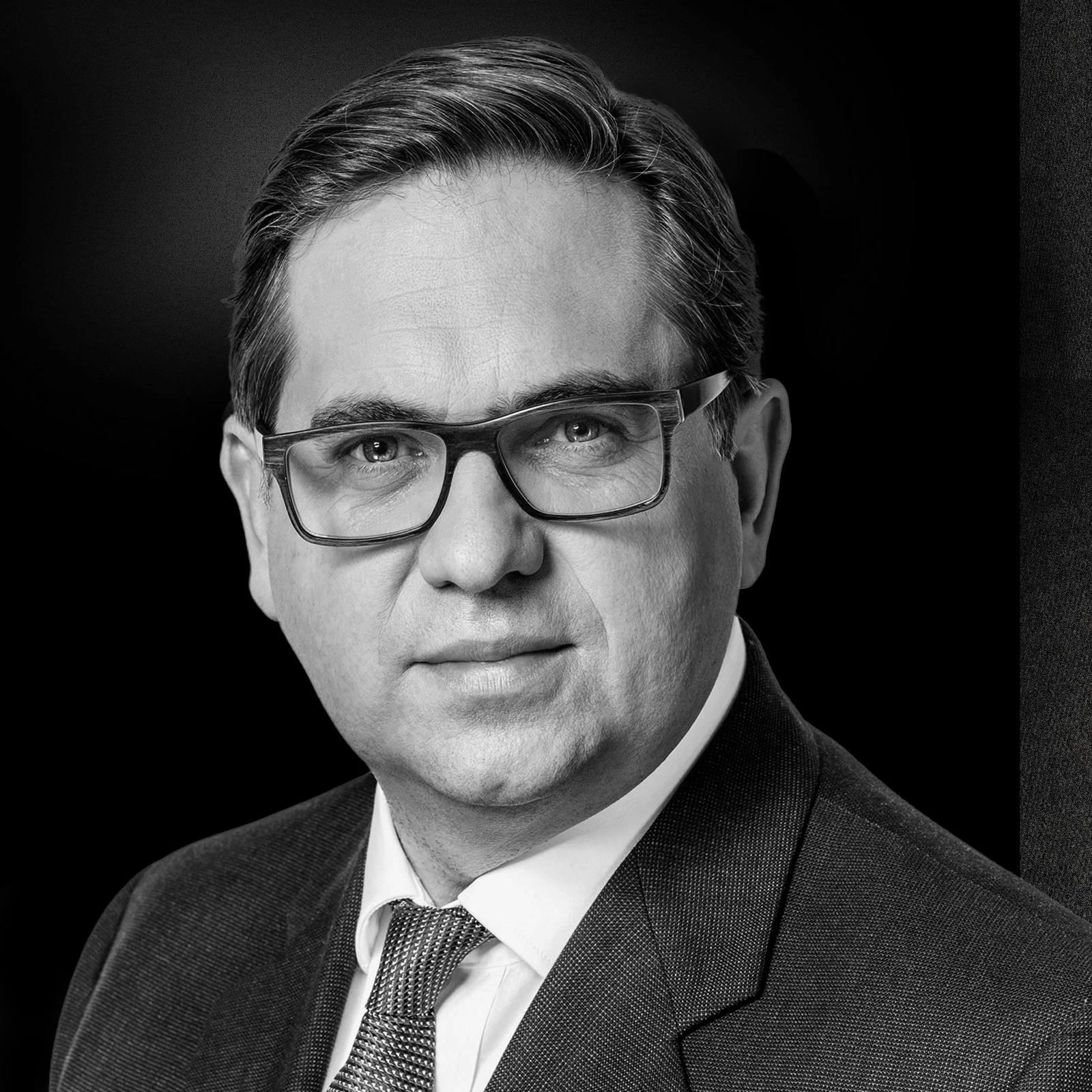
In a phase of increasing geopolitical fragmentation, where investment decisions depend more than ever on legal stability, Dr. Christian W. Konrad guides his clients through complex and often conflict-laden international legal arenas. His focus lies where economic interests collide with diverging legal systems—not in the political preliminaries, but in the moment of dispute.
Konrad is the Founder and Managing Partner of Konrad Partners, an internationally oriented law firm specialising in international arbitration, investment protection, and public international law. The firm is based in Vienna and operates across borders.
Admitted, among others, in Vienna and London, and active before international arbitral forums, Konrad operates confidently across different legal systems and procedural cultures—between civil law and common law, between state actors, international organisations, and globally active companies.
His practice encompasses highly complex proceedings relating to long-term energy contracts, large-scale infrastructure projects, concessions, natural resource rights, and failed investments. Regional focuses include Central and Eastern Europe, as well as selected growth markets in Africa and the Gulf region. Konrad acts both as counsel and as arbitrator, including in proceedings before the International Chamber of Commerce (ICC), the London Court of International Arbitration (LCIA), the Vienna International Arbitral Centre (VIAC), the Permanent Court of Arbitration (PCA), and the Singapore International Arbitration Centre (SIAC). His focus lies on robust contract structuring, effective investment protection, and the enforcement of international arbitral awards.
What defines his work is a strictly functional approach to the law. The emphasis is not on legal constructs, but on their resilience in the event of conflict. Konrad analyses legal arenas based on whether they are reliable, enforceable, and internationally compatible.
With Vienna as his base, he operates in immediate proximity to one of Europe’s established arbitration hubs. Over the years, the city has established itself as neutral ground for international dispute resolution and offers institutional stability as well as access to Central and Eastern European markets.
At B-Safe26, Dr. Christian W. Konrad will outline how entrepreneurs, investors, and decision-makers can realistically assess international legal arenas, precisely evaluate risks, and build resilient structures for cross-border engagements. His contribution provides an operational perspective on legal certainty in an increasingly multipolar world.
We use technically necessary cookies. Optional analytics cookies are only used with your consent. You can change your selection at any time.