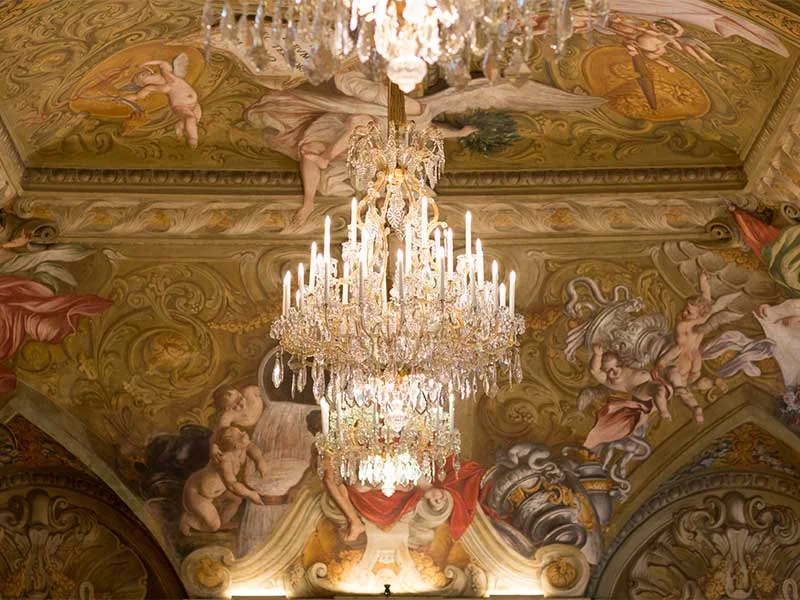
In the heart of Vienna’s historic centre, on Herrengasse, just steps from the Hofburg and Ballhausplatz, stands the Palais Niederösterreich – a building in which history was not merely displayed, but actively shaped.
Since 1513, the former Lower Austrian Landhaus served as the political assembly place of the Estates. Here, interests were aligned and conflicts were negotiated. In 1848, the building became a focal point of the revolution within the Austrian Empire. In 1918, the Provisional National Assembly convened in these very halls, marking the transition from the Habsburg Monarchy to the Republic.
During the Congress of Vienna in 1814/15, the city became the centre of Europe’s political reordering — shaped not only by formal negotiations, but equally by informal conversations and networks. In the Vormärz period, political tensions intensified here; in the 20th century, Vienna evolved into a diplomatic crossroads between East and West. This role as a place of mediation and exchange continues to define the city to this day — between protocol and conversation, between stage and backstage.
The Palais Niederösterreich thus stands for systemic change, reordering, and political clarification under real conditions.
This is precisely where B-SAFE26 positions itself: as a deliberately intimate setting for substantive exchange — one that seeks not publicity, but depth — within an environment shaped by centuries of decisive political action.

We use technically necessary cookies. Optional analytics cookies are only used with your consent. You can change your selection at any time.